THE MOST COSTLY CAMPAIGN IN U.S. AIR FORCE HISTORY
When aerial warfare began over North Vietnam, the United States Air Force (USAF) and Navy deployed a formidable lineup of supersonic fighter aircraft, including the F-100, F-111, F-4, and F-8, as well as ground-attack aircraft capable of carrying nuclear bombs, such as the F-105, and strategic bombers like the B-52. They also employed swing-wing F-111 aircraft, reconnaissance planes, electronic warfare aircraft, tactical support aircraft, and helicopters for combat support, jamming, search and rescue, and aerial refueling missions.
The fighter and attack aircraft used by the United States in the Vietnam War included all the most modern aircraft in the U.S. Air Force and Navy’s arsenal at the time.
American pilots had an overwhelming advantage in flight hours. Some commanders of operational air units—such as squadron and wing leaders—who conducted bombing raids over North Vietnam and engaged in air combat with North Vietnamese pilots had logged thousands of flight hours. In particular, F-8 pilots of the U.S. Navy were renowned for their exceptional flying skills and air combat proficiency, making them some of the best aviators in the U.S. Air Force.
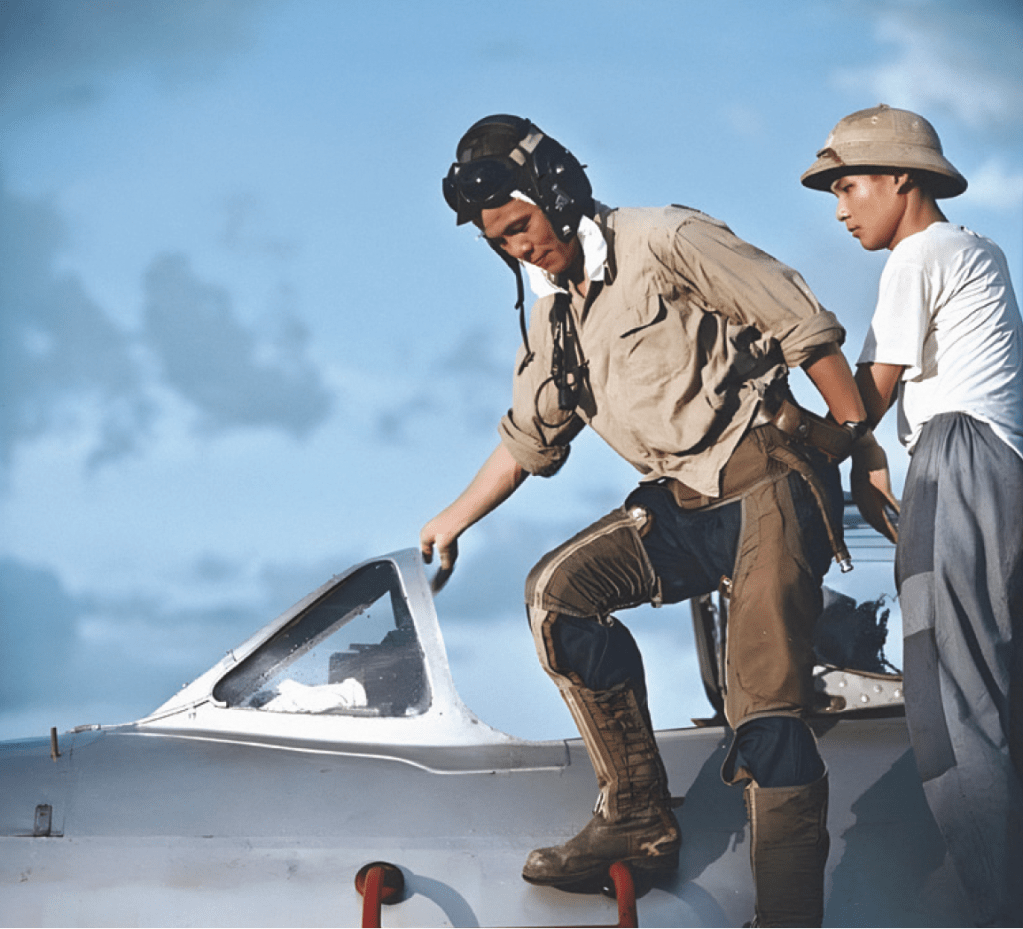
Pilot Phan Van Tuc shot down the first F-8 on April 3, 1965.
After the Gulf of Tonkin Incident in August 1964, the U.S. Air Force formulated a long-term strategy to destroy North Vietnam’s economic and military potential. This involved deploying naval aircraft from aircraft carriers and U.S. Air Force squadrons to bomb coastal targets from Quang Ninh down to the 17th parallel.
Operation Rolling Thunder was the longest (from March 2, 1965, to November 1, 1968), most intense (over 1 million sorties), and most heavily bomb-laden air campaign in modern aerial warfare history. However, it was also the most costly in terms of aircraft losses, the least effective, and one of the worst failures in U.S. Air Force history.
In early 1965, U.S. aircraft mainly faced North Vietnamese air defenses consisting of anti-aircraft artillery and low-altitude air defense weapons. Until April 3, 1965, American pilots had not yet encountered any enemy aircraft in combat.
Phi công Trần Hanh sau trận đánh lập công hạ chiếc F-105D đầu tiên ngày 4.4.1965. Cạnh Hanh là Phạm Ngọc Lan, phi công đã hạ chiếc F-8 ngày hôm trước.

However, on April 3, 1965, the Vietnam People’s Air Force (VPAF) officially entered the air war when MiG-17 squadrons from the 921st Fighter Regiment engaged in combat. In September 1965, MiG-17 units from the 923rd Fighter Regiment also joined the fight, followed by the introduction of MiG-21 squadrons in January 1966.
From then on, fierce aerial battles took place across the skies of Thanh Hoa, Hai Phong, Hanoi, and Thai Nguyen for more than three years.
Between August 1964 and October 1968, the Vietnamese Air Force shot down 195 U.S. aircraft while losing 85 MiGs in combat—a kill ratio of 2.2 to 1 in favor of the Vietnamese pilots. According to U.S. Air Force historians and analysts, this was one of the worst kill ratios in U.S. aerial combat history (compared to 10 to 1 in the Korean War and 50 to 1 in the Middle East conflicts). A CIA report concluded that Operation Rolling Thunder was ineffective because it failed to cripple North Vietnam’s economy. On October 31, 1968, the operation officially ended, with the U.S. President announcing a halt to the bombing of North Vietnam. By the end of Operation Rolling Thunder, more than 2,200 U.S. aircraft had been shot down over North Vietnam.
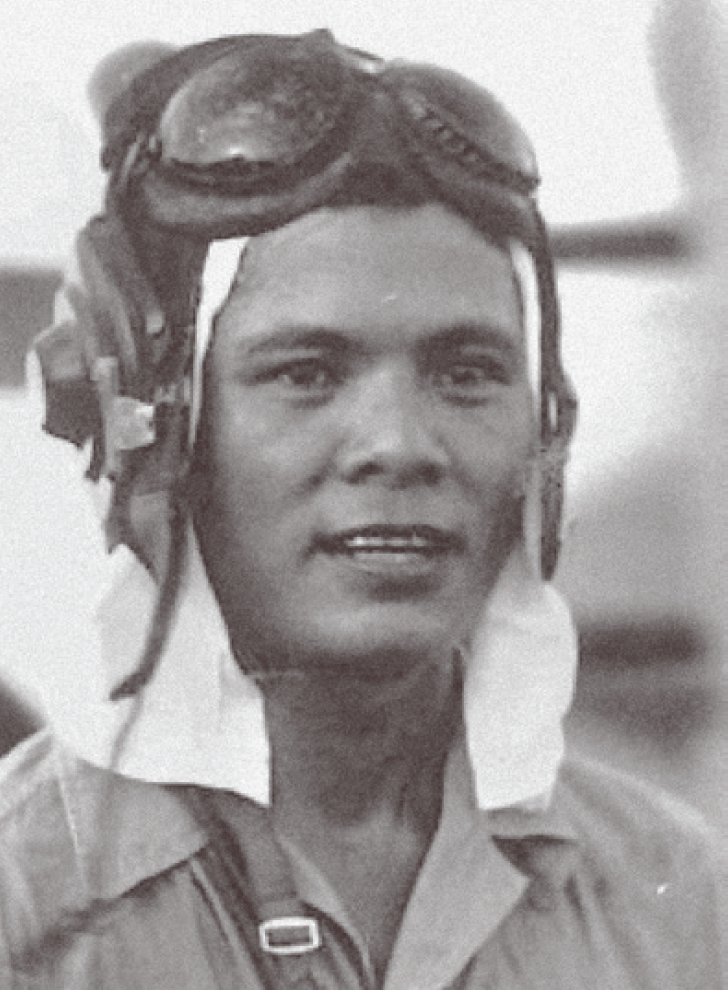
Pilot Phan Van Tuc
To strengthen forces, open an aerial front, and protect key targets, the Ministry of National Defense urgently decided to deploy the 921st Air Regiment back into combat. At dawn on August 6, 1964, from Mengzi Airfield (China), more than 30 MiG-17 aircraft lined up in formation, engines roaring, taking off in four-plane formations, fully armed and ready for battle, heading toward Hanoi. The first formation was led by Regiment Commander Dao Dinh Luyen as flight leader, with Navigation Chief Pham Ngoc Lan as wingman, Chinese pilot Tao Songmin (later a General and Commander of the Chinese Air Force from 1992 to 1994) in the third position, and Gunnery Chief Lam Van Lich in the fourth. Upon reaching Noi Bai, Dao Dinh Luyen led the formation in a flyby, tilting the wings in salute to the homeland. Pham Ngoc Lan had the honor of being the first to land, followed by the rest of the regiment. It was a historic moment as the Vietnam People’s Army officially welcomed a new and modern Air Force branch into its ranks, with the “swallows” of the sky ready to take flight in defense of the nation’s airspace.
Pilot Lam Van Lich was among the first MiG-17 formation to return to Vietnam on August 6, 1964 – a historic moment.
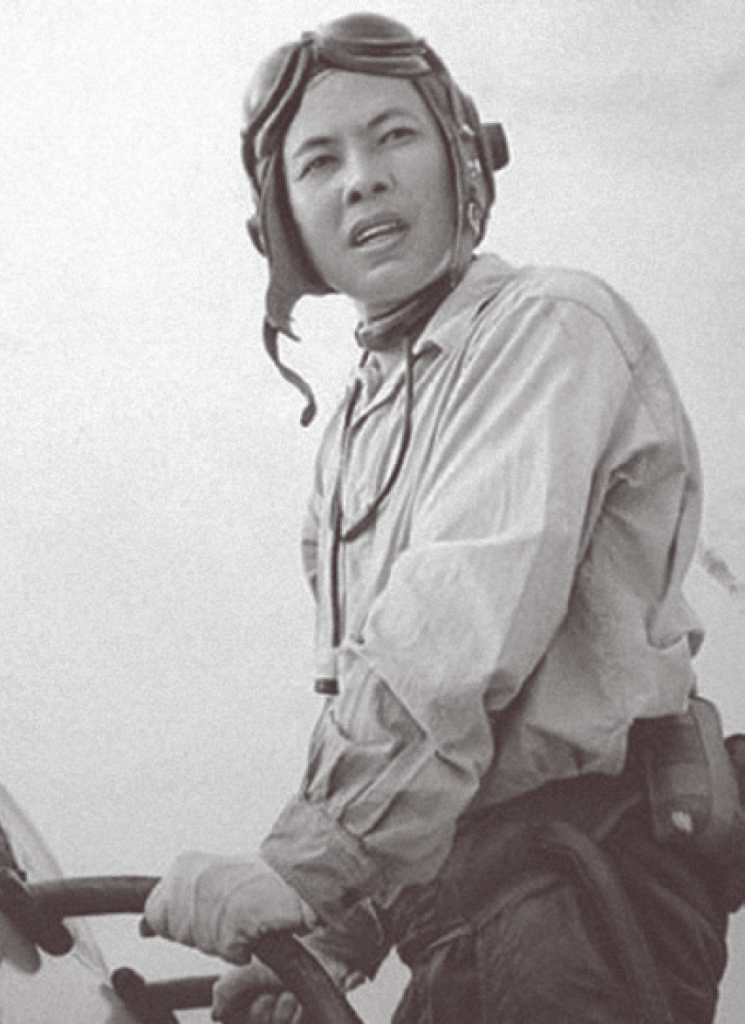
With consecutive victories on the first day of the aerial front, Pham Ngoc Lan and Phan Van Tuc shot down two F-8s in their first engagements on April 3, 1965, while on April 4, 1965, Tran Hanh and Le Minh Huan took down two F-105D Thunderchiefs. The MiG-17 formations of the 921st Air Regiment successfully thwarted U.S. Air Force attacks on targets around Ham Rong Bridge (Thanh Hoa).
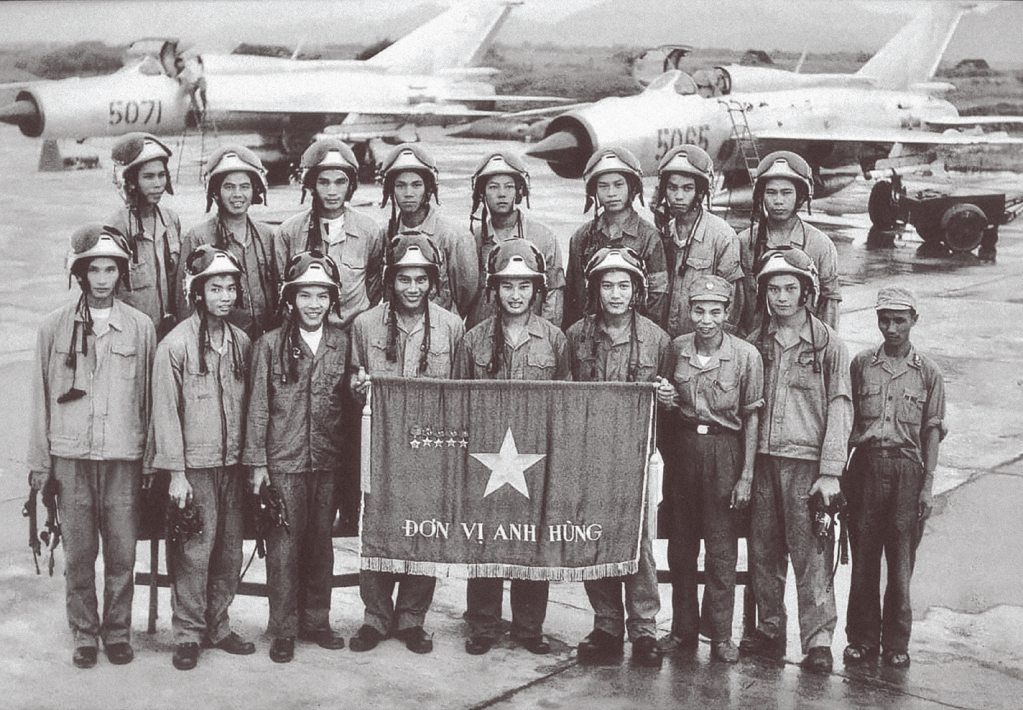
3nd Squadron of the 921st Fighter Regiment being awarded Vietnam President-granted victorious banner and the honorable title Hero of VNP Armed Forces Unit, 1969.
(From above, from left) Nguyen Van Lung, Bui Duc Nhu, Dong Van Song, Nguyen Tien Sam, Le Toan Thang, Nguyen Ngoc Hung, Tran Viet, Pham Dinh Tuan, Ngo Van Phu, Nguyen Van Nghia, Tran Hanh, Nguyen Duc Soat, Vu Ngoc Dinh, Vu Van Ngu, Chu Duy Kinh (political commissar), Luong The Phuc, Vo Si An (political officer).
The first two victories of the Vietnamese Air Force resonated globally. The fact that the supersonic F-105s were shot down by the outdated MiG-17s—aircraft nearly two generations behind—using only cannon fire forced the U.S. Air Force Command to rethink their approach. After the initial phase of Operation Rolling Thunder, both the U.S. Air Force and Navy concluded that, to successfully engage North Vietnamese pilots— who were agile and highly skilled in dogfighting—American pilots required additional air combat maneuvering training. The U.S. Navy established the “Top Gun” program (later, the U.S. Air Force developed the “Red Flag” program) to train pilots in advanced aerial combat maneuvers and tactical theories before deploying them to air combat missions over North Vietnam.
(Excerpt from “Aerial Battles Over Vietnam”
by Nguyen Sy Hung – Nguyen Nam Lien)
. . .
