TRẬN ĐẦU ĐÁNH THẮNG MỞ MẶT TRẬN TRÊN KHÔNG THẮNG LỢI
Lúc 9 giờ 40 phút, ta phát hiện các máy bay Mỹ đang bay vào không kích các cây cầu trên Đường số 1 (cầu Hàm Rồng, cầu Tào, cầu Đò Lèn, Thanh Hoá). Lúc 9 giờ 47 phút, biên đội 2 chiếc nghi binh của Trần Hanh và Phạm Giấy cất cánh bay vào vùng trời Ninh Bình. Một phút sau, biên đội tấn công bao gồm Lan, Túc, Quỳ, Phương cất cánh. Đến 10 giờ 09 phút, số 4 Phương phát hiện mục tiêu 6 chiếc F-8E (từ tàu USS Hancock) bay hộ tống 3 chiếc A-4E và 3 chiếc A-4C với nhiệm vụ tấn công các mục tiêu quanh cây cầu Hàm Rồng và Đò Lèn. Trong khi đó trên cao là các máy bay F-4B làm nhiệm vụ chặn đánh MiG.
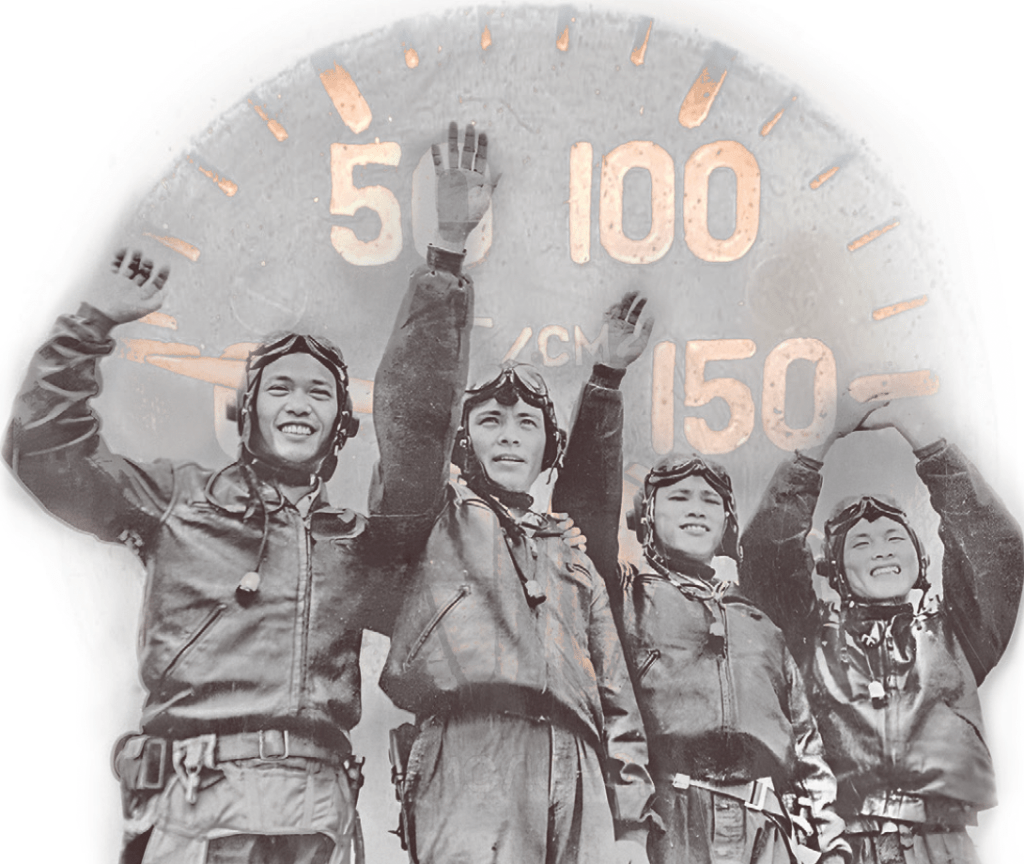
A formation of four MiG-17a aircraft took part in the air battle to defend Ham Rong bridge:
– PHAM NGOC LAN (FLIGHT LEADER)
– PHAN VAN TUC (WINGMAN NO. 2)
– HO VAN QUY (WINGMAN NO. 3)
– TRAN MINH PHUONG (WINGMAN NO. 4)
In this engagement, they successfully shot down two F-8 Aircraft of the U.S Navy.
At 9:40 AM, enemy aircraft were detected heading towards critical bridges along Highway 1, including Ham Rong Bridge, Tao Bridge, and Do Len Bridge in Thanh Hoa. At 9:47 AM, a diversionary flight of two MiG-17s, piloted by Tran Hanh and Pham Giay, took off and headed towards Ninh Binh airspace. One minute later, the attack flight consisting of Lan, Tuc, Quy, and Phuong took off. By 10:09 AM, wingman Phuong spotted a formation of six F-8E aircraft (from USS Hancock) escorting three A-4E and three A-4C attack aircraft, whose mission was to strike targets around Ham Rong Bridge and Do Len Bridge. Above them, F-4B fighters were stationed to intercept any MiG incursions.
Upon spotting the target, flight leader Pham Ngoc Lan in his MiG-17 locked onto an F-8 flown by Major S. Thomas. Once within the appropriate firing range, he engaged, successfully hitting the F-8 with cannon fire, which ignited and subsequently crashed. Simultaneously, Tuc, the second pilot, identified another F-8 and executed a dive from behind, delivering a concentrated burst of gunfire that also resulted in the enemy aircraft catching fire and crashing to the ground. Caught off guard by the MiG assault, the remaining F-8s immediately engaged their afterburners and fled, leaving the A-4s without fighter escort. Meanwhile, the supporting F-4 fighters remained unaware that the MiGs had ambushed the F-8s.
The attack formation successfully returned to Noi Bai Airport. However, the flight leader, having depleted his fuel reserves, was compelled to execute an emergency landing on a sandbank along the Duong River. The pilot emerged unscathed, and the aircraft was subsequently retrieved, repaired, and reinstated into service.
Thus, on April 3, 1965, the MiG-17 formation of Lan, Tuc, Quy, and Phuong shot down two F-8s of the U.S. Navy. This event not only represented the inaugural air combat victory for the Vietnam People’s Air Force but also signaled the commencement of a successful aerial campaign. On the same day, an A-4C from the USS Hancock was brought down by anti-aircraft fire, resulting in the ejection and subsequent capture of its pilot, Major Raymond Arthur Vohden. Additionally, an F-100D and an RF-101C were also lost to anti-aircraft defenses, leading to the capture of Captain Herschel Scott Morgan. Several other American aircraft incurred damage, including that of squadron commander Lieutenant Colonel Robinson Risner, which was forced to land at Da Nang.

During the Vietnam War, the F-8 was the first American fighter to engage in aerial combat with the MiG-17s of the Vietnam People’s Air Force and was notably the first U.S. aircraft to be shot down by a MiG-17 in the region. Throughout the conflict, the United States experienced the loss of 170 F-8s, while the Vietnam People’s Air Force asserted that they had downed 15 of these aircraft in aerial engagements. U.S. Navy pilots, who took great pride in flying the F-8, often expressed a sentiment that being removed from the ranks of F-8 pilots equated to being excluded from the ranks of fighter pilots altogether. However, it was the F-8 that became the first American jet to be downed in a dogfight with a MiG-17 over Vietnam.
. . .
